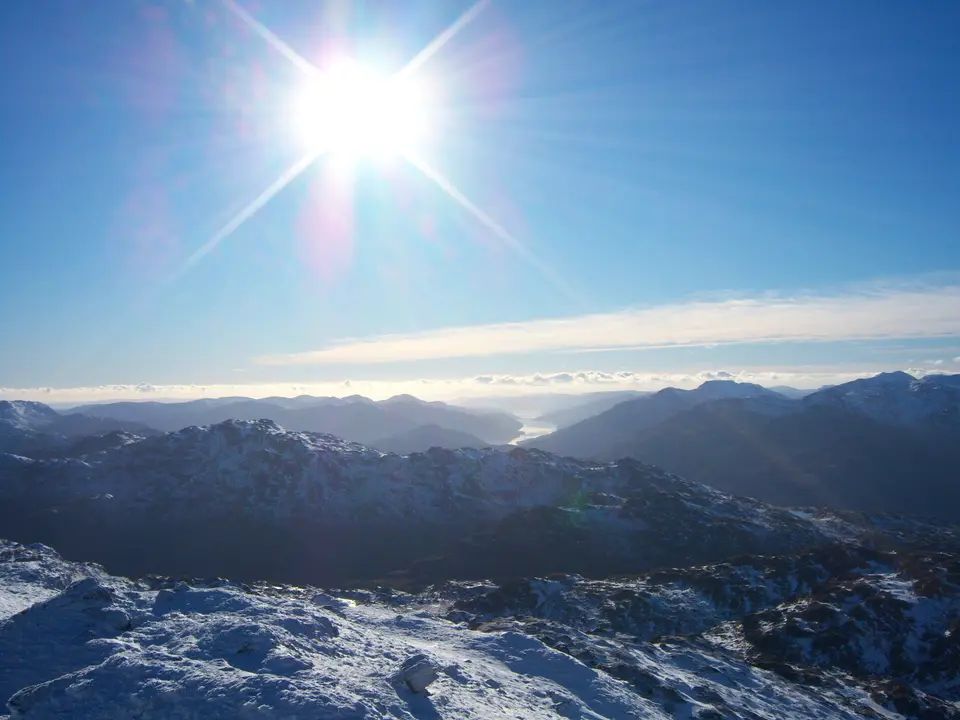

Loch Lomond weather and best time to visit
Month by month, with midges and loch safety
Loch Lomond is changeable in every month. The best time to visit is late May to June, or September: May is one of the driest months and midges are fewest at the edges of the season. October is the wettest month, and July and August bring the warmest days and the worst midges.
- Driest month
- May
- Wettest month
- October
- July average high
- 19°C
- Midge peak
- Jul–Aug
Midges bite most at dawn and dusk when it is still, damp and overcast.
A 3-day outlook with sunrise and sunset times appears here when JavaScript is on. Without it, check a live forecast on the day: the monthly averages below still apply.
When is the best time to visit?
Late May to June, or September. May is the driest month on the Met Office record we read, the days are long, and the midge season is only starting. September keeps most of the summer light while the midges fade.
July and August are the warmest months, with an average high of 19°C at Glasgow Springburn, the nearest Met Office 1991 to 2020 station we could read. They are also the peak midge months, and the loch shore is at its busiest. Autumn and winter are wetter and darker, but they are quieter and good for views when the cloud clears.
Pick the base first if you can. Balloch at the south end is the easiest base in any weather, Luss on the west shore is the classic view, and Balmaha on the east shore is the start of the Conic Hill walk. The village guides below cover each one.
Month by month
Average daily highs, lows and rainfall are Met Office 1991 to 2020 averages for Glasgow Springburn. It is the nearest long-term record we could read, so treat it as a guide: the hills and the west shore of the loch are cooler and wetter than Glasgow. We could not find a sourced count of rain days, so expect showers in any month.
| Month | Average high | Average low | Rain | Midges | What it suits (our view) |
|---|---|---|---|---|---|
| January | 6.3°C | 1.3°C | 112 mm | None | Short days and snow on the tops. Quiet villages, and good for log-fire weekends. |
| February | 7.0°C | 1.4°C | 98 mm | None | Still wintry. Crisp days when the cloud lifts, with the hills at their clearest. |
| March | 9.1°C | 2.5°C | 87 mm | None | Lengthening days with a few warm hours. Hills can still hold snow. |
| April | 12.1°C | 4.3°C | 65 mm | None | Good low-level walking and few visitors. Showers come and go quickly. |
| May | 15.3°C | 6.5°C | 63 mm | Starts late in the month | One of the driest months, with midges only just starting. A strong all-round pick. |
| June | 17.7°C | 9.8°C | 71 mm | Building | Long evenings and a dry run before the midges build. A strong all-round pick. |
| July | 19.2°C | 11.2°C | 97 mm | Peak | Warmest month, and the busiest. Midges at their worst on still evenings. |
| August | 18.6°C | 11.2°C | 106 mm | Peak | Warm but wet by the loch. Midges peak, so carry repellent. |
| September | 16.1°C | 9.1°C | 100 mm | Falling | Midges fade and the light is soft. A strong pick for walkers. |
| October | 12.4°C | 6.1°C | 124 mm | None | The wettest month. Autumn colour, but plan indoor stops. |
| November | 8.9°C | 3.4°C | 110 mm | None | Short, wet days. Cruises and many boat trips are reduced or finished. |
| December | 6.4°C | 1.3°C | 118 mm | None | The darkest month. Cosy, but expect rain and short days. |
Temperatures and rainfall: Met Office, Glasgow Springburn, 1991 to 2020. Midge months are typical, from a guide to the Scottish midge season. The last column is our editorial view.
Plan around the weather
Check the forecast the day before
Read the Today line at the top of this page, then check the Met Office or Yr forecast for the hills. Conditions on the tops can differ a lot from the shore, so look at the hill forecast if you are climbing. Planning a climb? Our guides to Ben Lomond on foot and the Conic Hill route cover each route.
Expect midges from late May to early September
Midges are most active early in the morning and late in the evening, on still, overcast, humid days. The National Park says to expect lots of them in the summer months. A breeze or a sunny afternoon helps; wear long sleeves in the evening and carry a repellent. Midges are the main reason many visitors choose May, June or September.
Layer up, even in summer
Bring a waterproof jacket in every month, a warm layer for the boat and the hills, and shoes that cope with wet ground. Pack sunglasses too: bright days happen in every season.
Treat the loch as cold
We could not find a sourced loch temperature by month. The National Park says its lochs stay cold enough to cause cold water shock even on a warm day: go in slowly, never swim alone, and expect to be coldest about 10 minutes after getting out. Water here can get deep very close to the shore.
Keep a wet-day plan
Rain can arrive on any day. Have an indoor option ready, such as activities and attractions that work in the rain, or a covered cruise. Check boat times first: boats reduce in winter.
Check on the day
- Rain-day counts are not in our sources, so we have not given one. Check the forecast rather than relying on an average.
- Cloud on the tops can hide the path on Ben Lomond. If you cannot see the next marker, go down.
- Cruise Loch Lomond runs scheduled cruises to the end of October on the autumn timetable we checked on 12 October 2026, with a reduced winter service. Look at the boat operator before you plan around a sailing.
- Camping? A permit is needed on the National Park’s camping management zones from 1 March to 30 September, so see camping and motorhome rules before you pitch a tent in wet weather.
- How we check and date every figure is on how we check facts.
Weather by place
The loch is long, and conditions change along it. The south end is low-lying and the north end is hill country, so the same day can feel different at each. Here is how that plays out where you might stay.
- South endLow-lying and easiest in poor weather. Balloch has the station and shelter nearby, and Aberfoyle and Drymen are a short run away.
- West shoreThe A82 runs along the loch under the hills. Luss is the usual stop, then Tarbet and Arrochar at the foot of steep hills that can cloud over quickly.
- East shoreA stop in Balmaha gets you to Conic Hill. Further north, Rowardennan and its shore is the start of the Ben Lomond path, and has no bus service. Cloud on the top makes the path harder, so check before you climb.
- The TrossachsCallander and the wooded lochs inland. The route up Ben Ledi is a hill day, so wait for a clear forecast.
- BreadalbaneKillin is at the head of Loch Tay, well north of the loch, so check its forecast separately.
Related planning
Pick a day by weather: a clear morning suits a hill, a grey day suits a cruise, and a wet one suits a museum or a long lunch.
Questions people ask
What is the best month to visit Loch Lomond?
Late May to June, or September. May is one of the driest months, the days are long and the midges are only starting; by September they are fading.
When are the midges at Loch Lomond?
Typically from late May to early September, and worst in July and August. They bite most at dawn and dusk on still, overcast, humid days. A breeze keeps them down.
How warm is Loch Lomond water?
Cold. We could not find a sourced temperature by month, but the National Park says its lochs stay cold enough to cause cold water shock even on warm days. Enter slowly and never swim alone.
Which month is the wettest?
October, with an average of 124 mm at Glasgow Springburn (Met Office, 1991 to 2020). November and December are close behind.
What is the most beautiful town in Loch Lomond?
Our opinion is Luss, for the pier, the row of cottages and the view across the water. Other people prefer Balmaha or Tarbet.
Does Loch Lomond get snow?
The higher hills can hold snow in winter. Our sources give no snow-day count, so check the Met Office mountain forecast before a winter climb.