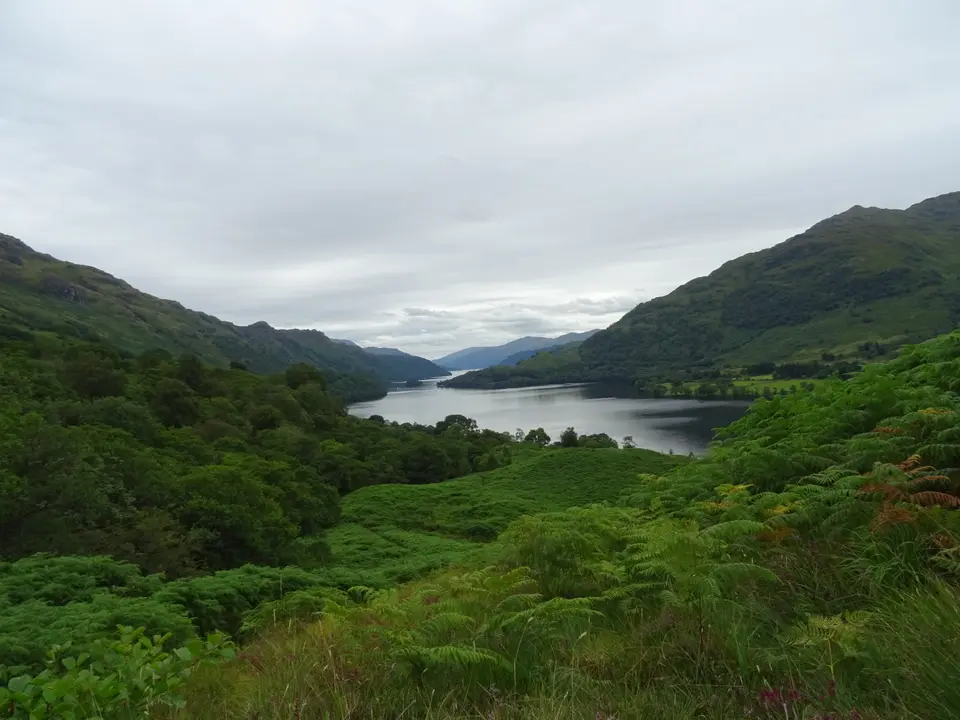

Loch Lomond visitor information
Parking, transport, camping and seasons
Loch Lomond visitor information starts here: how to get there, where to park, the weather, camping rules and the map.
The practical guides
Start with parking and transport. They decide where your day can start.
-
Car parks
Charges and rules by village. Most are pay and display.
Luss, per hour £1.20
-
Getting there
Train, bus and coach from Glasgow and Edinburgh. Trains reach Balloch directly.
Trains to Balloch about 2 an hour
-
Weather and best time
Which months suit boats, hills and camping.
Boat season, 2026 27 Mar to 1 Nov
-
Camping and permits
Permits are needed in the management zones during the season.
Permit season 1 March to 30 September
-
Map of the loch
How the villages, roads, paths and piers fit together.
More to help you decide
-
Eat and drink
Where to find lunch, by village.
-
How we verify prices and times
Each fact is dated and linked to its source.
Which guide do you need first?
Start with the question that decides your day. Coming without a car? Read how to get there first: direct ScotRail trains run from Glasgow to Balloch about twice an hour, Citylink coaches stop at Luss, Tarbet and Arrochar, and the Ember E5 stops at Balloch, Luss, Tarbet and Ardlui.
Driving? The car park charges matter more than the road map, because the village decides the bill. Luss charges £1.20 an hour, Loch Lomond Shores £4 for the day, Balmaha gives the first hour free and then charges £3 for 2 hours, Rowardennan is £5 all day, and Aberfoyle's Riverside car park is free.
Sleeping out? Check camping permits and byelaws before you pack. A permit is needed in the four management zones, which cover under 4% of the National Park, and breaking the byelaw can mean a report to the Procurator Fiscal and a fine of up to £500.
Unsure when to come? The month-by-month weather guide shows which months suit boats, hills and camping.
Loch Lomond in each season
Boats run in the main season, which is 27 March to 1 November in 2026. The Loch Katrine steamship Sir Walter Scott sails daily on its spring and summer schedule from 27 March to 25 October 2026, with selected sailings from 26 October 2026 to 25 March 2027.
Camping permits are needed from 1 March to 30 September. From 1 October 2026 to 28 February 2027 no permit is needed in the zones. The Three Lochs Forest Drive closed to vehicles from 4pm on 30 September and reopens in spring, although its trails stay open to walkers, bikes and horse-riders.
Midges are the summer drawback. They are most active from late May to early September, peaking in July and August, and bite most in the early morning and late evening on still, overcast, humid days. Spring and autumn are quieter on that count.
The climate record we use is Glasgow Springburn for 1991 to 2020. Average daily highs run from 6.3C in January to 19.2C in July. October is the wettest month at 124 mm and May the driest at 63 mm.
How long to plan for
One day covers one base and one activity: Luss and a cruise, or Balmaha and Conic Hill, which takes 2 to 3 hours. Two or three days lets you add Ben Lomond, which takes 4.5 to 5.5 hours by the tourist path, and the Trossachs.
For a car-free day, take the direct train to Balloch and a one-hour cruise, which is £18.50 for an adult with Sweeney's Experience Cruise. For a day by car, pick one village, pay once for parking and spend the rest of the time on foot or on the water.
Questions people ask
Is Loch Lomond in the Highlands?
Partly. The Highland Boundary Fault crosses the loch at Conic Hill, near Balmaha. The south of the loch lies on the Lowland side and the north on the Highland side.
Is parking free at Loch Lomond?
Mostly not. Luss charges £1.20 an hour, Loch Lomond Shores £4 all day, Balmaha gives the first hour free (then £3 for 2 hours), and Rowardennan is £5 all day. Aberfoyle's Riverside car park is free.
How long does it take to explore Loch Lomond?
One day covers one base and one activity, such as Luss and a cruise, or Balmaha and Conic Hill (2 to 3 hours). Add a second day for Ben Lomond (4.5 to 5.5 hours) or the Trossachs.
How do Scots pronounce Loch Lomond?
Say "lokh LOH-mund", with the ch as in loch, made at the back of the throat.
When is the best time to visit Loch Lomond?
For boats, ferries and the Trossachs steamship, come between late March and the end of October, when the main season runs. For fewer midges, choose spring or autumn, because they are active from late May to early September.